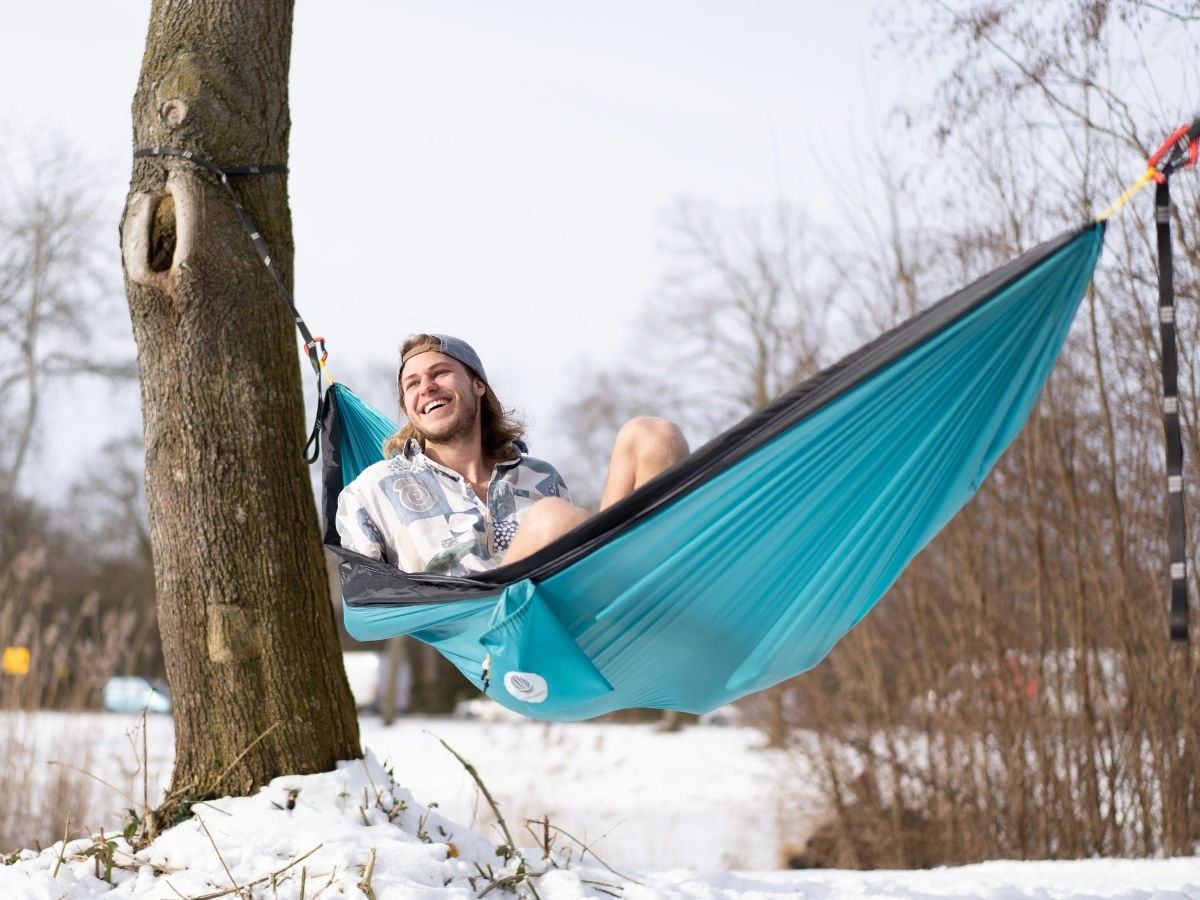
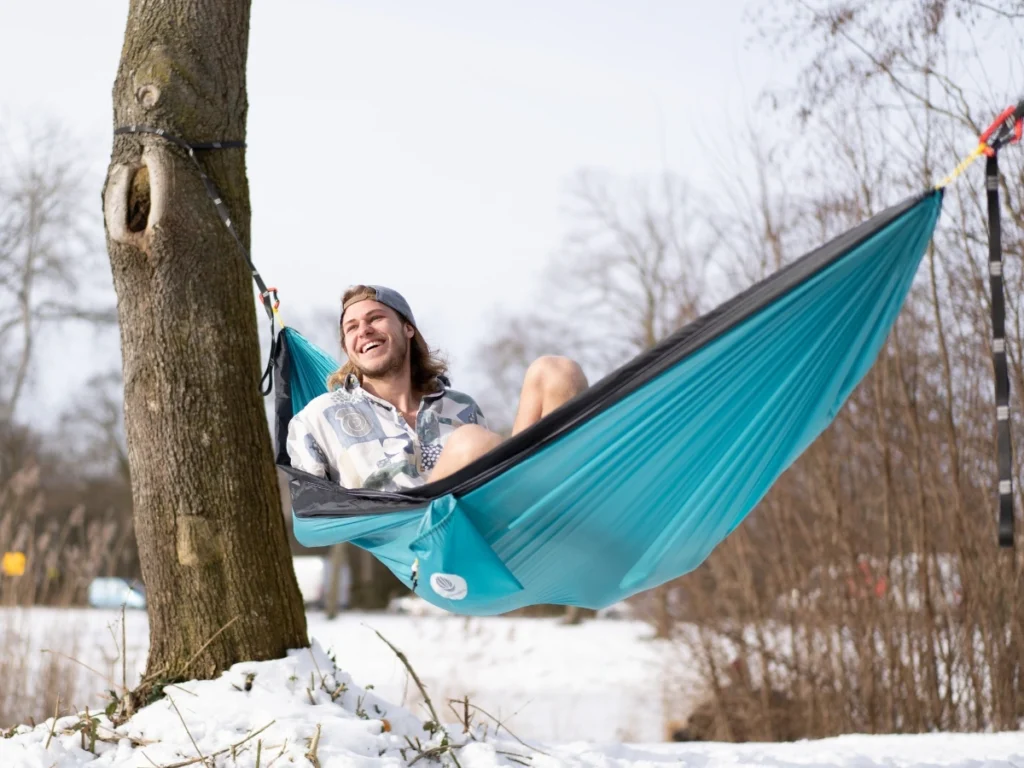
Fabian Adler enjoying the FlowBro hammock made from industrial leftovers from the hot air balloon production
The origin of Waste Alchemists
Everything started in late 2020, during my (Sam’s) studies in Global Project and Change Management in Zwolle. As part of the programme, we were challenged to create a sustainable business plan. Together with my team, Fabi, Kim and Kaisa, we knew we wanted to work on a tangible product that could actually exist. But we had no clear idea what that should be.
One day, Fabi came back from spending time in nature with his hammock and said: “We should make lightweight hammocks.” The idea felt simple and appealing, but it immediately raised a question: What would make a hammock sustainable?
The answer came unexpectedly. The next day, while skateboarding, I watched a hot air balloon being unpacked from a small trailer before lifting into the sky. Seeing the fabric up close sparked a thought: What if we made hammocks from old hot air balloons? Lightweight, strong, and designed to carry weight.
We got into action and contacted hot air balloon operators, parachuting companies, and others working with ripstop nylon.
The moment everything shifted
Eventually, we reached a company owner who gave us an answer we did not expect. He explained that old hot air balloons were technically an option, but often too oily and greasy from gas to be practical. But then he added something almost casually: “We also have huge rolls of ripstop nylon that have never been used. We normally end up burning them. Why don’t you use that?”
That sentence left us speechless. Brand new material. Never used. Treated as waste.
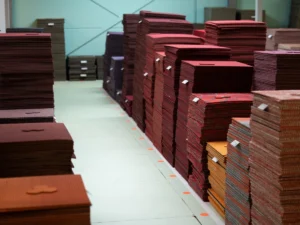
He explained that they are required to order massive 1,5m x 1000m rolls of fabric per colour, while often only needing a small percentage.. The rest is tied to that very specific colour code that no one else is likely to need. So it sits there. And eventually, it is discarded and burned.
That was the real aha moment for me. If completely new material can become waste simply because it no longer fits a system, how much more usable material must be out there? How many valuable resources do we never even question? And how many stories like this remain invisible?
From that moment on, waste no longer felt like an end point, but like a blind spot worth exploring.
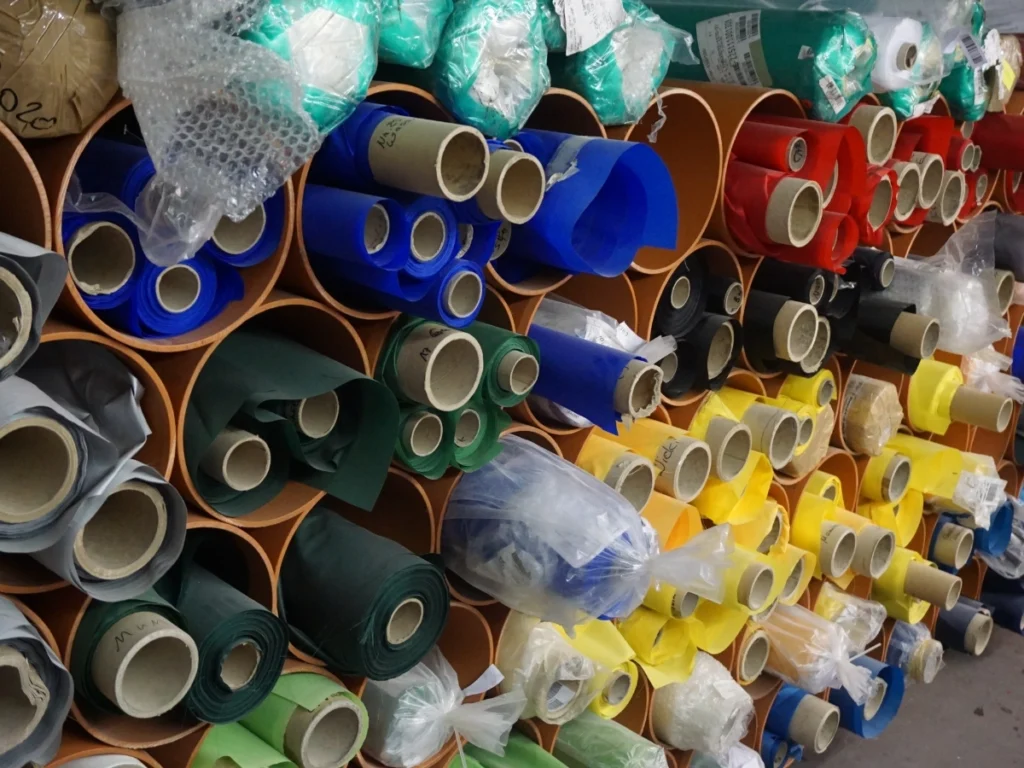
Industrial leftovers from the hot air balloon production that are commonly burned
From curiosity to a bigger mission
That curiosity stayed with me. While we officially registered and ran our lightweight hammock company FlowBro, I realised that what fascinated me most was not only creating products from waste, but sharing the stories behind them. I started using the opportunity I had to pick up my camera and experiment with documenting stories related to transforming discarded materials into meaningful products.
Over the years, this took different forms. My very first test happened with Shasa from Skateriors in early 2022. I was hooked. He embodied everything I believed in, combining his passion for skateboarding with his carpentry skills to transform wasted skateboards into awesome products.
At the same time, I realised I was lacking filmmaking skills. That’s when I decided to take part in a documentary filmmaking minor in Utrecht called CampusDoc at the end of 2022. There, I met Siebe, with whom I co-directed a short documentary called Jouer, Jouer, Jouer, about our protagonist’s creative perspective on waste.
In 2023, I finished my studies with an internship at the video production company VanSelfie and began working as a freelance photographer and videographer for change makers.
Starting Waste Alchemists on Social media
At the beginning of 2024, I officially launched the Waste Alchemists Instagram and started sharing the stories of creative makers transforming waste in the Netherlands.
What became clear very quickly was this: the stories were powerful, but social media alone was not enough. Posts faded fast. Stories disappeared in feeds. There was no clear overview or place to return to. At the same time, I saw how much makers struggled. They invested enormous time and energy into their work, yet gaining visibility, financial stability, and long-term support remained difficult. Too few people actively found them and chose their products over linear alternatives.
Throughout 2024, I also learned this the hard way myself. Running Waste Alchemists as a donation-based project while documenting around 20 makers was not financially sustainable. It required far more time and effort than I had imagined, especially as I was not yet offering enough concrete value to makers and visitors. If this was going to last, it needed a different structure.
Why a platform and why Daniel changed everything
The conclusion slowly became unavoidable. If Waste Alchemists was going to truly help, it needed to become more than stories scattered across social media. It needed a home. One place where makers and their stories, products, workshops, and events could come together. A platform that made it easier not only to get inspired, but to act, both online and offline.
Then, in September 2025, Daniel appeared out of nowhere, and everything accelerated. With his proactive energy, sharp thinking, and web design skills, he immediately understood the essence of Waste Alchemists and its potential beyond what it already was. He did not just design a platform. He helped translate a vision into something tangible, usable, and scalable. Daniel was a game changer in making this real.
At the same time, Jelle helped shape a clear visual identity by creating the branding and logo. Feya added another essential layer through her illustrations, bringing warmth and imagination into the project. Suddenly, Waste Alchemists no longer felt like just an idea, but like something recognisable and confident, something that could be taken seriously without losing its playfulness.
Together, we started building a home for waste transformation. A platform that brings makers, their stories, products, workshops, and events together. A place that helps them gain visibility, credibility, and income, and makes choosing products made from waste not only the better option, but the more exciting one.
And all of this started with a hammock, a hot air balloon, and an eye-opening truth about waste.